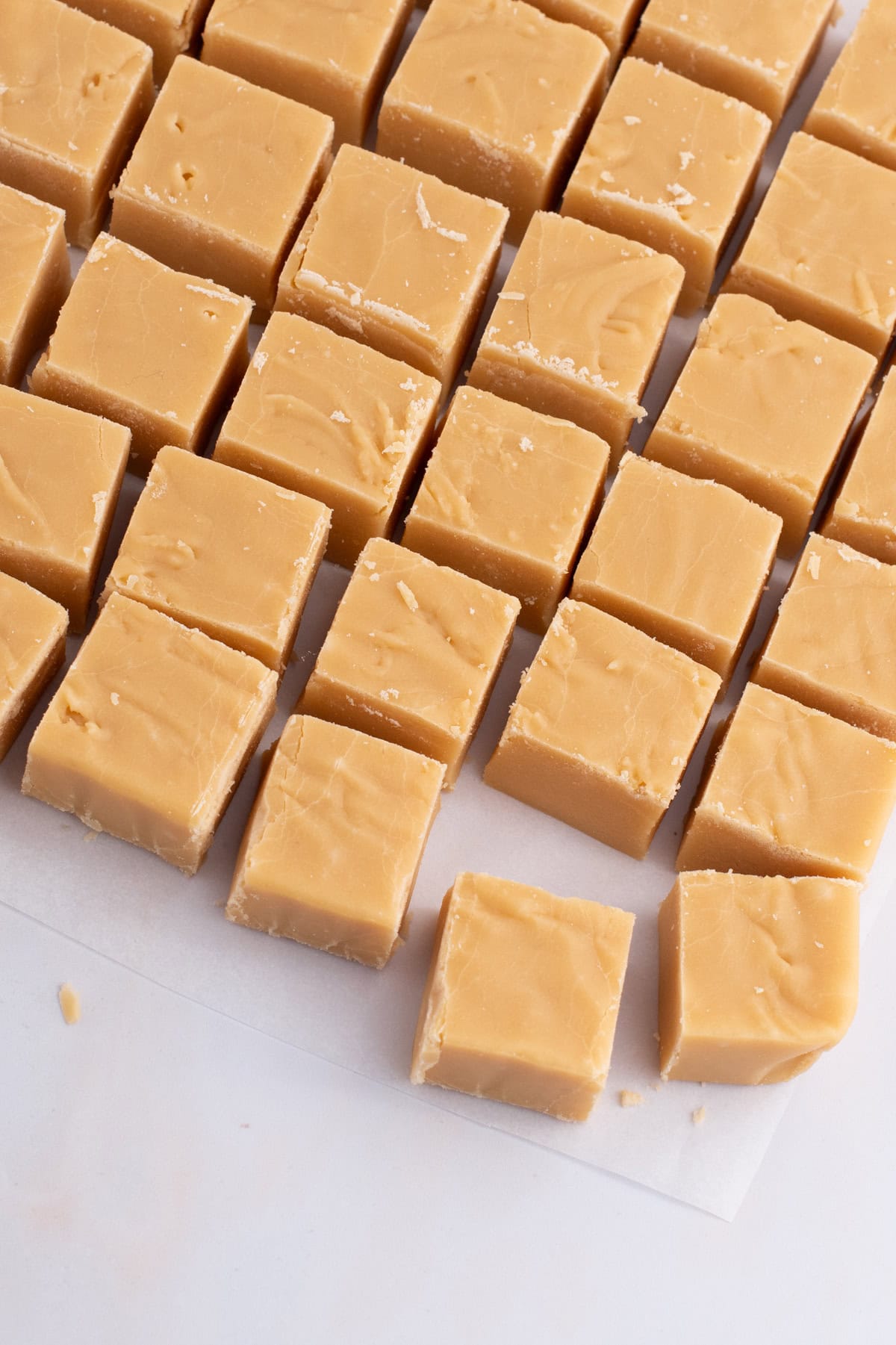
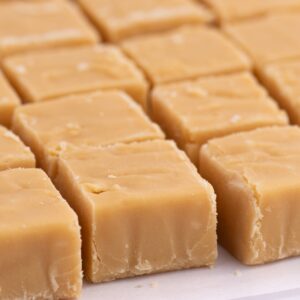
Scottish Tablet is made with just four simple ingredients, but getting that classic crumbly, melt-in-the-mouth texture depends on reaching the soft-ball stage and beating the mixture until it thickens. Sweeter than sweet and quite unlike fudge, it’s a real traditional Scottish treat.
Scottish Tablet Recipe Snapshot
- Recipe Type: Traditional Scottish sweet (candy).
- Texture: Firm, crumbly and slightly grainy, with a melt-in-the-mouth texture.
- Method: Boiled on the hob, then beaten and left to set.
- Setting Point: Soft-ball stage, around 115-120°C (240-250°F).
- Cooking Time: Around 40 minutes.
- Setting Time: At least 2 hours, although overnight is ideal.
- Total Time: 2 hours 40 minutes.
- Makes: 30 pieces.
- Ingredients: Only 4.
- Dietary information: Naturally gluten-free, egg-free and nut-free, with substitutions for dairy-free and vegan too.
Summarise & Save this Recipe on:
What is Scottish Tablet?
Aside from being one of the sweetest and most delicious treats known to man…
Scottish Tablet is a traditional Scottish sweet made by boiling sugar, milk, butter and condensed milk together, before beating the mixture to thicken and then leaving it to set. The result is a firm but crumbly treat, with a slightly grainy texture that melts in the mouth. There’s truly nothing else quite like it!
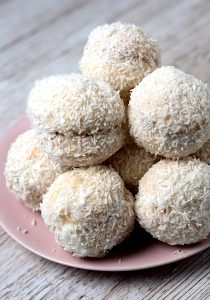
Although tablet is often compared with fudge, the two aren’t quite the same. Fudge is usually softer and creamier, while tablet is firmer, more crumbly and unmistakably sweet. It is closer in spirit to other old-fashioned Scottish sweets like my Scottish Coconut Ice, which is also boiled on the hob before being pressed into a tin to set, although the ingredients and finished texture are quite different. In some ways the texture isn’t a million miles away from Scottish Macaroons, which also have that crumbly, melt-in-the-mouth texture, but theirs is actually achieved with the potato in those sweets.
Scottish Tablet: A Scottish Favourite
If you’re from Scotland, you’ll know that tablet has a habit of appearing whenever people get together. It turns up at weddings, parties and ceilidhs; on the table for St Andrew’s Day, Hogmanay and Christmas; and on bake-sale tables, festive hampers and Secret Santa gifts. It always makes a thoughtful homemade gift, especially for someone who is hard to buy for – and is just as welcome as a little sweet at the end of a meal or alongside a cup of coffee.
Tablet is popular with visitors to Scotland, but it isn’t simply a tourist sweet. Scots adore it too, and most of us know someone who makes “the best tablet”. That might be your Mum, Granny, auntie or a friend, and their batch will always be the one you compare every other piece against. It is cut into little squares for a reason: tablet is so sweet that a small piece goes a long way.
Tablet has been part of Scottish confectionery for centuries. Early Scottish references to tablet, or taiblet in Scots, appear in 18th-century sources, including a recipe for orange tablet recorded in Mrs McLintock’s 1736 cookbook. Today’s recipes may differ in their ingredients and method, but tablet is still boiled, beaten and left to set before being cut into pieces. It belongs in the same collection of Scottish favourites as my traditional Scottish Shortbread and Caramel Slice.
Key Ingredients
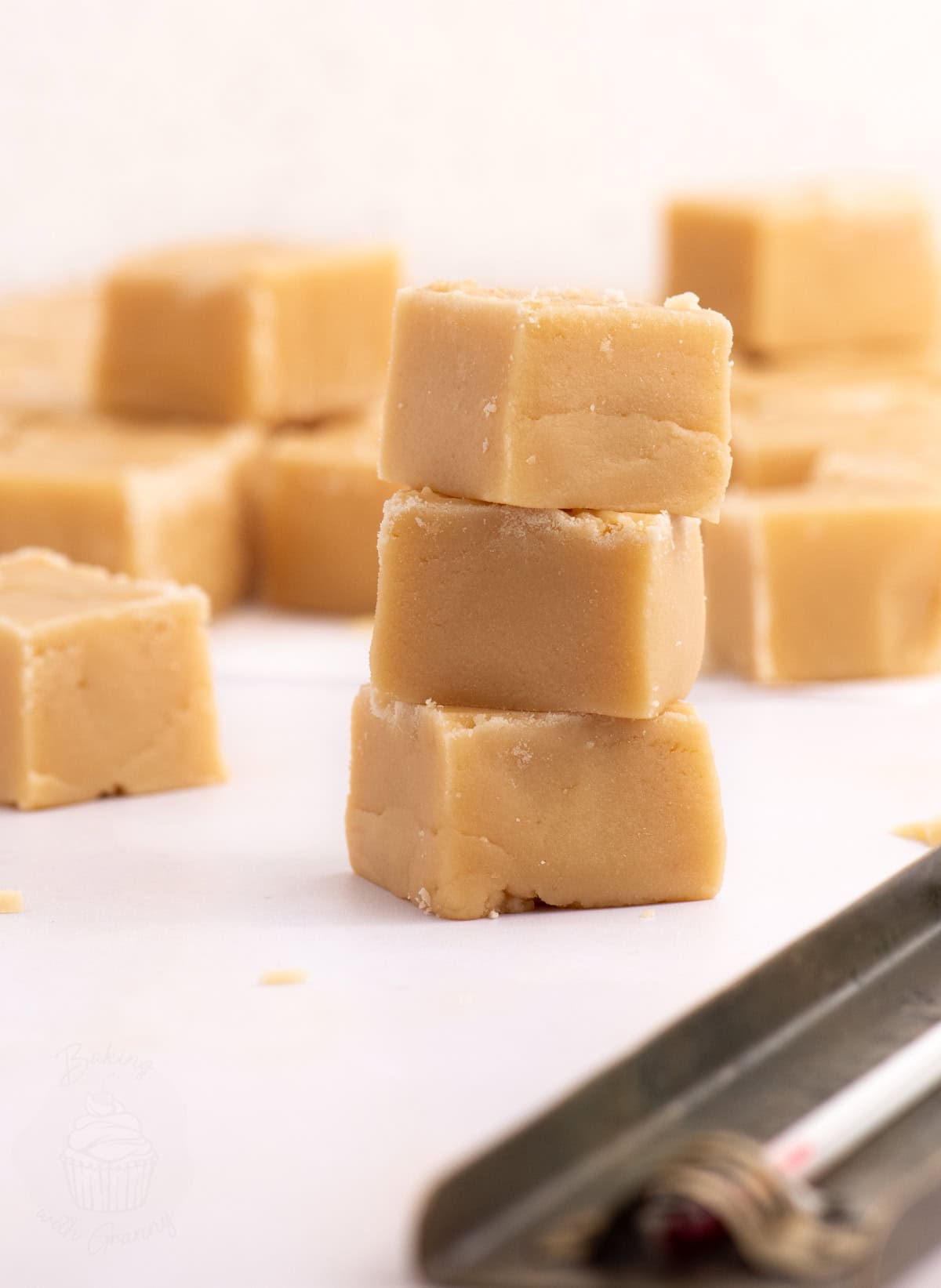
There are only four ingredients in this Scottish Tablet recipe, but each one matters. Here’s what I use and what you need to know about the different choices.
That’s all you need – there’s no vanilla in this recipe; it’s not a traditional addition, and there’s no need to add it. Tablet has plenty of flavour without it.
See the recipe card for a full ingredients list, required quantities and cup conversions.
Substitutions & Additions
Sugar: Caster sugar (superfine sugar in the US) is my first choice for Scottish Tablet, as finer crystals dissolve quicker and easier, but you can use ordinary granulated sugar if that’s what you have. Golden caster sugar is also a great option if you want a deeper flavour and colour to your tablet.
Milk: Full-fat and semi-skimmed milk both work well in this recipe. You can also use soya milk (soy milk in the US) or coconut milk if you’d like to vary the flavour. Coconut milk will give the tablet a noticeable coconut flavour.
Whisky: For a whisky-flavoured tablet, add a little whisky to the mixture after taking the pan off the heat, before beating.
Sea Salt: For a salted version, sprinkle a little sea salt over the surface of the tablet after spreading it into the tin. Add it while the mixture is still warm, so the salt sticks to the top.
Looking for dairy-free, gluten-free or vegan adaptations? See the Free-from & Vegan section below.
Free-from & Vegan
Amy recommends: If you regularly need to adapt baking recipes for gluten-free, dairy-free, egg-free or vegan diets, I highly recommend The Elements of Baking by Katarina Cermelj, creator of The Loopy Whisk. It’s a brilliant resource for understanding how substitutions work, rather than simply swapping ingredients and hoping for the best.
Gluten-free Options:
This recipe is naturally gluten-free. Just be sure to check your individual ingredients for allergens, especially when serving to those with coeliac disease.
Nut-free Adjustments:
This recipe contains no nuts, but as always, be sure to double-check the allergen lists for your individual ingredients.
Dairy-free Swaps:
To make this a dairy-free recipe, you can use a plant-based block margarine, your favourite milk alternative (I usually use soya milk) and a dairy-free condensed milk. Carnation’s vegan condensed milk was a great option for this recipe but, unfortunately, they have now discontinued it. However, sweetened condensed coconut milk is a great alternative and more readily available, although it does give your tablet a slight coconut taste.
Egg-Free Adaptations:
No eggs are required for tablet, so this recipe is naturally egg-free.
Vegan Substitutions:
To make vegan Scottish tablet, you can simply use a vegan block margarine, your favourite milk alternative (I usually use soya milk) and vegan condensed milk. Carnation’s vegan condensed milk was a great option for this recipe but, unfortunately, they have now discontinued it. However, sweetened condensed coconut milk is a great alternative and more readily available, although it does give your tablet a slight coconut taste.
Allergy Disclaimer & Resources:
Any advice or suggestions to make recipes “free-from” or vegan are purely suggestions. Please double-check all packaged ingredients individually, taking extra caution when baking for those with allergies or intolerances.
For official guidance on food allergies, please see Food Standards Agency (food.gov.uk) | For more info on coeliac disease, please see Coeliac UK (coeliac.org.uk) | For more info on a vegan diet, please see The Vegan Society (vegansociety.com)
How to Make Scottish Tablet
Scottish Tablet uses a simple method, but the temperature and beating stages are important for getting that classic crumbly texture. Follow the step-by-step below, or head to the recipe card at the bottom for the full printable recipe.
- Dissolve the sugar and milk. Place the sugar and milk in a large saucepan over a gentle heat. Stir occasionally until all the sugar has dissolved. Meanwhile, grease and line a 20×20cm (8×8 inch) baking tin with greaseproof paper and set aside.
- Add the margarine/butter and condensed milk. Once the sugar has dissolved, add the margarine/butter and allow it to melt. Add the condensed milk and mix well.
- Boil to soft-ball stage. Increase the heat and stir continuously while the mixture boils and reaches the soft-ball stage – around 115-120°C (240-250°F) on a sugar thermometer. This usually takes around 15-20 minutes, but timings can vary.
- Beat the tablet. Remove the pan from the heat and allow the mixture to settle briefly. Beat with a spoon in the pan until it thickens and is beginning to set. This may take a good bit of beating, so stick with it – underbeating is much more common than overbeating.
- Transfer and leave to set. Transfer the mixture to your prepared tin and spread it evenly into the edges and corners. Leave to set for at least 2 hours, but ideally overnight. For neat squares or bars, score the top after about 30 minutes. Once set, slice into squares to serve.
Can I make Scottish Tablet in a microwave?
Some bakers have told me they make Tablet successfully in the microwave, but I haven’t tested this myself, so I can’t recommend timings or instructions.
I still recommend making Tablet the traditional way on the hob (especially with my recipe), as you can monitor the mixture with a sugar thermometer and make sure it reaches the required soft-ball stage – around 115-120°C (240-250°F) – before beating it to the right consistency.
Microwave cooking times can vary considerably, particularly between appliances. Hot sugar mixtures can also cause serious burns, so take great care if you do choose to experiment.
Top Tips for Scottish Tablet
- Use a Large Saucepan: The mixture bubbles up considerably once it starts boiling, so use your biggest pan, even if it is much bigger than you think you’ll need.
- Dissolve the Sugar: Take your time over the first melting stage and make sure the sugar has completely dissolved in the milk before increasing the heat. There’s no benefit to rushing this part.
- Use a Sugar Thermometer: There are ways you can make Tablet without a thermometer, but these are massively open to interpretation and make it much more difficult to achieve perfect results. Instead, always use a sugar thermometer and aim for the soft-ball stage, around 115-120°C (240-250°F).
- Keep Stirring: Once the mixture reaches boiling point, stir continuously to help prevent it from catching on the bottom of the pan.
- Just Beat It (Beat It): It is incredibly difficult to overbeat Tablet, especially when you are mixing by hand. Underbeating is a much more common problem. I’ve never managed to overbeat tablet by hand, so keep going until the mixture thickens and is beginning to set. (If you are using an electric mixer, you may need to be a bit more cautious about overbeating – I don’t personally recommend this, but understand it can be helpful in terms of mobility issues.)
- Score the Top: If you want neat squares or bars, score the tablet after about 30 minutes of setting, while it is still a little warm. This makes cutting it once set much easier. Alternatively, you can just break your Tablet into little pieces for a more rustic finish.
Storage & Make Ahead
- Make Ahead: Scottish Tablet is ideal for making ahead. You can make it days, or even weeks, before you need it, which is especially handy for parties, bake sales, gifts and other celebrations.
- Storage: Once fully set and cut, store your Tablet in an airtight container at room temperature. It keeps well for at least 2-3 weeks, and often longer, if you can resist it that long! There’s no need to keep Tablet in the fridge – in fact, given that it is mostly sugar, I don’t recommend putting it in the fridge, as you risk moisture getting into the Tablet and it becoming soft and sticky.
Scottish Tablet FAQs
Generally speaking, the soft-ball stage for cooking sugar is around 115°C (240°F). But because my Mum’s old thermometer labels soft-ball as 120°C, and my new digital one says 115°C, I recommend aiming between 115-120°C (240-250°F) on a sugar thermometer for Scottish Tablet.
You can, but I strongly recommend using a sugar thermometer. Other methods of judging the soft-ball stage (like dropping some of the mixture into cold water) are much more open to interpretation, and it can be difficult to tell when the mixture has actually reached the right temperature. A thermometer gives you a much more reliable point to aim for, and I will always recommend using one for Tablet making.
The most common reasons are that the mixture didn’t reach a high enough temperature, or that you didn’t beat it for long enough after coming off the heat. Make sure you reach 115-120°C (240-250°F), then keep beating until the mixture thickens and is beginning to set. Even when you feel you have done everything right, though, the occasional batch may still not set perfectly – it’s a rite of passage, and one of the most frustrating parts of Tablet making! 😅
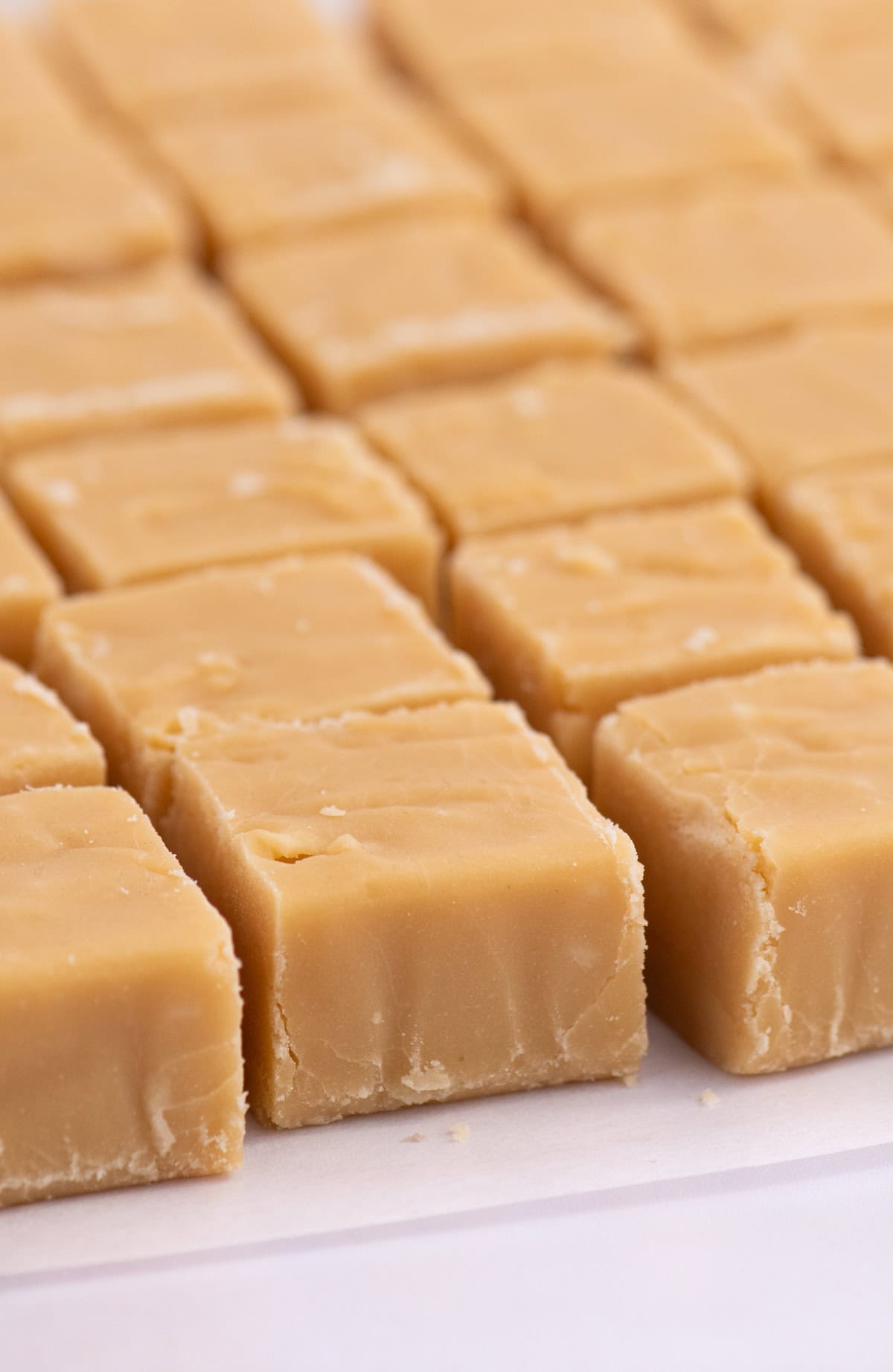
A slightly grainy texture is part of traditional Scottish Tablet. It should be firm and crumbly, while still melting in the mouth, rather than being completely smooth and creamy like fudge. If your tablet has some unpleasantly crunchy sugar crystals, make sure the sugar has completely dissolved in the milk next time, before you increase the heat.
Beat the mixture in the pan until it thickens and is beginning to set. This can take a good bit of beating(!!), particularly when mixing by hand. I have never managed to overbeat tablet by hand, with underbeating being a much more common problem.
If you are using an electric mixer, take a little more care as it may be possible to overbeat the mixture. While I don’t personally recommend using one, I understand that it can be helpful for people with mobility issues.
Some people do freeze Tablet, but I don’t recommend it. It can be difficult to prevent moisture from forming as it defrosts, which may leave the tablet damp and affect the texture.
Since Tablet keeps well for at least 2-3 weeks (and often longer) when stored in an airtight container at room temperature, I prefer to make it ahead and store it that way.
More Scottish Baking Recipes
If you loved this traditional Scottish Tablet, here are some more of my favourite Scottish recipes for you to try next:
Save this recipe!
Want to save this recipe for later? Pop your email below and come back to it when you’re ready to bake.
Scottish Tablet
INGREDIENTS
- 900 g Caster Sugar
- 250 ml Milk (dairy (full-fat or semi-skimmed), soya, coconut…)
- 110 g Block Margarine or Butter
- 397 g Condensed Milk (usually 1 tin)
INSTRUCTIONS
- Place the sugar and milk in a large saucepan over a gentle heat. Stir occasionally until all the sugar has dissolved. Grease and line a 20×20cm (8×8 inch) baking tin with
greaseproof paper . Set aside. - When all the sugar has dissolved, add the butter/margarine and allow it to melt.
- Once the butter has melted, add the condensed milk and mix well. Increase the heat and stir continuously while the mixture boils and reaches the soft-ball stage (115-120°C / 240-250°F) on your sugar thermometer. This usually takes 15-20 minutes, but timing may vary.
- Remove from the heat and allow the mixture to settle a little before beating. Beat with a wooden spoon in the pan until the mixture thickens and begins to set.
- Transfer to your pre-lined tin and spread evenly to the edges and corners.
- Leave to set for at least 2 hours, but ideally overnight. If you want neatly cut squares/bars of tablet, score your tablet into your desired size/shape about 30 minutes into setting. Alternatively, you can simply break the tablet into individual servings once set for a more rustic feel.
IMPORTANT NOTE:
All my recipes are developed using a digital scale and the metric system (grams and millilitres). Cup measurements are available as a conversion, but these, unfortunately, won’t always be as accurate. For best results, I always recommend baking with a digital scale.
RECIPE NOTES:
LIKE THIS RECIPE?
Leave a comment and rating below!Originally published in May 2017.